
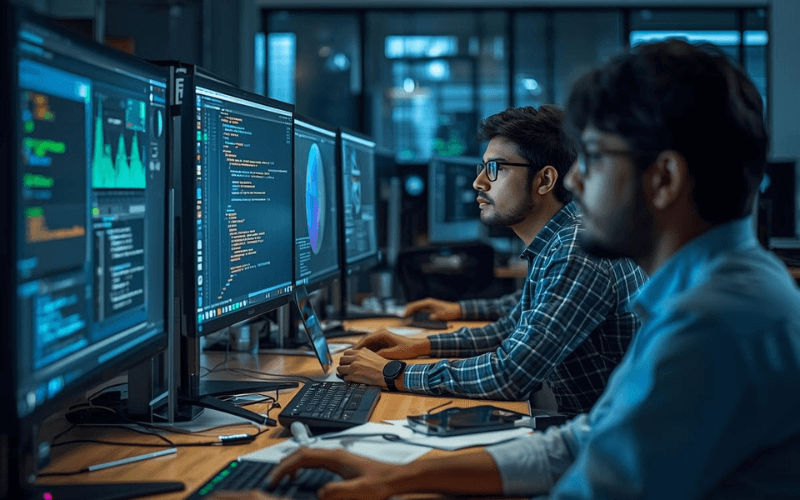
Software development in India is entering a critical inflection point. With strong global demand for offshore digital engineering, rapid cloud adoption, and disruptive technologies reshaping entire industries, 2026 will be defined by evolution rather than incremental change.
Businesses, technology leaders, and software providers alike are preparing for a phase where adaptability, automation, and innovation become core differentiators for competitive advantage.
Accelerated Digital Transformation Across Industries
The last decade saw Indian enterprises move from digitizing basic systems to full ecosystem transformation. By 2026, digital transformation will no longer be a project it will be an ongoing business imperative.
Key impacts include:
- Migration from legacy systems to modern, scalable architectures
- Integration of customer experiences across platforms
- Real-time analytics and automated decision support
- Software platforms that drive revenue, not just operations
Industries such as fintech, healthcare, manufacturing, education, and logistics are leading the charge demanding robust, scalable, and secure software systems.
Cloud-Native and Edge-First Development
As cloud computing becomes mainstream and edge computing gains traction, software development in India will increasingly emphasize:
- Microservices-based architectures
- Distributed computing and serverless models
- Containerization (Kubernetes, Docker)
- Hybrid third-party and private cloud solutions
This trend enables faster time-to-market, resilient performance, and seamless scaling critical attributes for modern software platforms.
AI-Driven Software Engineering
Artificial intelligence (AI) and machine learning (ML) are reshaping how software is conceptualized, built, and maintained.
Key trends in AI-driven development include:
- AI-assisted coding and intelligent debugging
- Predictive maintenance and auto-remediation
- Automated quality assurance and test generation
- Embedded intelligence in applications for personalization
AI is no longer an add-on; it’s becoming a core part of the software development lifecycle in India.
Low-Code/No-Code Platforms and Rapid Prototyping
To meet rising market demand and shorten delivery cycles, companies are embracing low-code and no-code development platforms.
Benefits include:
- Rapid prototyping and faster validation
- Citizen developer enablement
- Reduced dependency on specialized engineering talent
- Lower initial development costs
These platforms will coexist with traditional development, especially for business-critical applications.
Cybersecurity and Secure Software Practices
Security is now inseparable from software development. Cyber threats are more sophisticated, and risk management has become a strategic priority.
Indispensable practices shaping 2026 include:
- Security-by-design and DevSecOps integration
- Zero-trust architectures
- Compliance with data privacy standards
- Continuous monitoring and automated threat detection
Software developed without built-in security features is no longer viable in a digitally connected world.
Remote & Hybrid Software Delivery Models
The shift to hybrid and distributed teams is permanent. India’s software workforce has adapted to global collaboration standards, enabling:
- 24/7 development cycles across geographies
- Flexible resource scaling
- Global team collaboration through asynchronous workflows
- Offshore hubs and virtual delivery centers
Remote-first models improve resilience and access to diverse talent pools.
Demand for Domain-Specific Software Solutions
General software products are being complemented by domain-specific solutions. Industry specialization is growing rapidly across:
- Healthcare tech platforms
- Fintech and digital payments software
- Construction and property tech systems
- Logistics and supply chain automation
- Retail commerce and customer analytics platforms
Clients increasingly seek software vendors who understand both domain nuances and technology stack depth.
Sustainable and Ethical Software Development
Sustainability and ethical technology use are evolving priorities. Businesses are now factoring:
- Carbon-efficient compute and data use
- Responsible AI and bias mitigation
- Accessibility and inclusive design
- Data governance aligned with ethical standards
India’s software ecosystem is adapting frameworks that support responsible digital innovation.

Skills and Talent Shifts in India’s Software Workforce
The future demands a new blend of skills. Beyond core coding, software engineers in India are expected to bring:
- AI/ML expertise
- Cloud architecture mastery
- DevOps and automation proficiency
- Data engineering and analytics capability
- Domain knowledge relevant to business use cases
Upskilling and cross-functional roles will define success in 2026 and beyond.
Software Outsourcing Trends and Global Delivery Models
India continues to hold a dominant position in software outsourcing, but the landscape is evolving:
- Outcome-based outsourcing over time-and-material models
- Integrated consulting and solution design engagements
- Hybrid onshore–offshore delivery teams
- Strategic partnerships over transactional contracts
Global clients are increasingly looking for Indian partners that can co-innovate, not just code.

The Road Ahead: What Businesses Should Prepare For
To thrive in the next wave of software development in India, organizations should focus on:
- Investing in scalable and flexible technologies
- Embedding security and data privacy into every layer
- Building cross-disciplinary engineering teams
- Embracing AI and automation to enhance productivity
- Leveraging cloud-native and edge-computing patterns
Software will continue to be the heart of business transformation, not just a supporting function.
The future of software development in India is dynamic, technology-driven, and oriented toward value creation. Trends such as AI-driven engineering, cloud transformation, cybersecurity integration, and domain-focused solutions will shape how software is built and consumed.
Organizations that align with these trends are better positioned to innovate, scale, and compete in 2026 and beyond.
With deep expertise in custom software development, digital transformation, and modern engineering practices, Sesame Technologies Pvt. Ltd. partners with businesses to build future-ready technology platforms that drive strategic growth and measurable outcomes.