

The construction industry is standing at a turning point. On one side are traditional builders relying on experience, manual processes, and relationship-driven growth. On the other are digital builders adopting smart systems, automation, and data-driven decision-making.
Over the next five years, the gap between these two approaches will widen significantly. The question is no longer whether digital transformation is needed but who adapts fast enough to stay competitive.
This blog explores how traditional and digital builders operate today, where each stands in 2026, and who is better positioned to win in the years ahead.
Who Are Traditional Builders?
Traditional builders are companies that primarily depend on:
- Manual project tracking (Excel sheets, paper-based workflows)
- Phone calls and in-person coordination
- Experience-driven decision-making
- Referral-based marketing
- Isolated tools for sales, finance, and execution
These businesses often have strong industry knowledge and long-standing relationships but limited visibility across operations.
Strengths of Traditional Builders
- Deep domain expertise
- Established client trust
- Strong local presence
- Proven execution models
Limitations
- Slow response to leads
- Limited scalability
- Higher operational risk
- Poor data visibility
- Dependency on individuals instead of systems
Who Are Digital Builders?
Digital builders leverage technology-driven construction management, automation, and centralized platforms to run their businesses efficiently.
They typically use:
- Construction CRM systems for lead and client management
- Digital project tracking tools
- Automated follow-ups and reporting
- Data-driven forecasting and planning
- Integrated marketing and sales workflows
Instead of relying solely on experience, they rely on real-time data and smart systems.
Strengths of Digital Builders
- Faster decision-making
- Better lead conversion rates
- Clear project visibility
- Scalable processes
- Reduced dependency on manual effort
Key Differences: Traditional vs Digital Builders
| Area | Traditional Builders | Digital Builders |
| Lead Management | Manual tracking | CRM-based automation |
| Marketing | Referrals & offline | Data-driven digital marketing |
| Project Tracking | Excel & paperwork | Centralized dashboards |
| Follow-ups | Human-dependent | Automated workflows |
| Scalability | Limited | High |
| Risk Control | Reactive | Predictive |
| Decision Making | Experience-based | Data-backed |
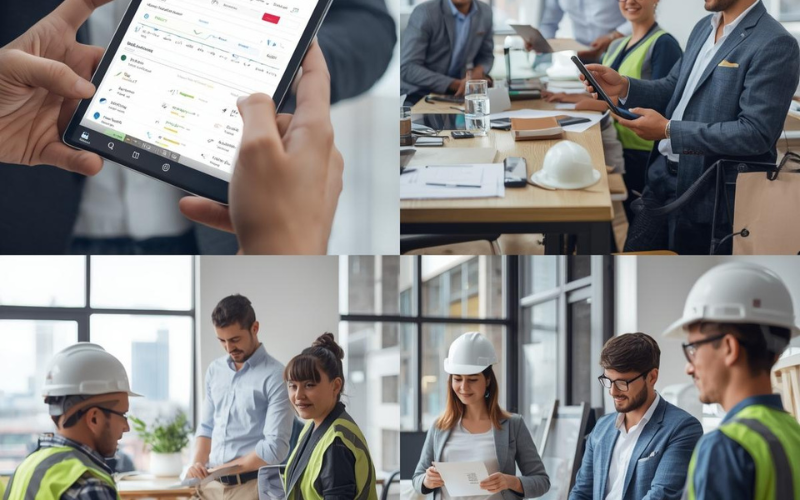
Why Digital Builders Are Gaining an Edge
1. Faster Lead Response
In today’s market, speed matters. Digital builders respond to enquiries instantly using automation, while traditional builders risk losing prospects due to delays.
2. Better Cost Control
Digital tools provide clear insights into budgets, timelines, and resource utilization — helping builders avoid overruns and surprises.
3. Smarter Marketing ROI
Digital builders track which campaigns generate real enquiries, reducing marketing waste and improving conversion efficiency.
4. Higher Client Transparency
Clients increasingly expect real-time updates, digital documentation, and clear communication all easier with digital systems.
What the Next 5 Years Will Look Like
Between 2026 and 2031, the construction industry will see:
- Increased competition from tech-enabled builders
- Higher customer expectations for transparency and speed
- Rising pressure to reduce delays and inefficiencies
- Greater adoption of digital construction management platforms
- Decline of businesses that fail to modernize operations
Traditional builders who resist change may survive in niche markets, but large-scale growth will favor digitally mature companies.
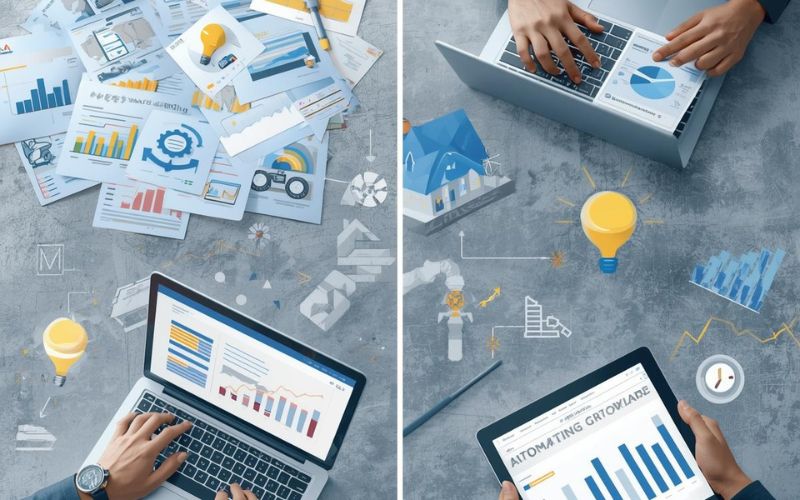
Can Traditional Builders Still Win?
Yes , if they adapt.
The most successful construction companies of the next five years will not abandon experience but will combine industry knowledge with digital systems.
Winning builders will:
- Digitize lead and client management
- Automate repetitive operational tasks
- Use data to guide decisions
- Improve collaboration across teams
- Adopt scalable construction software platforms
The shift doesn’t require becoming a tech company, it requires building smarter systems.
The Hybrid Model: The Real Winner
The future does not belong exclusively to traditional or digital builders, it belongs to hybrid builders who blend experience with automation.
These companies:
- Retain their industry expertise
- Enhance efficiency with technology
- Improve margins through process optimization
- Deliver better customer experiences
Hybrid builders are best positioned to dominate regional and national markets over the next five years.
Final Verdict: Who Will Win?
Traditional builders have history.
Digital builders have systems.
But the winners of the next five years will be builders who evolve.
Construction companies that invest in digital platforms, automation, and integrated workflows today will be better equipped to scale, compete, and adapt to future market demands.
With experience in developing digital platforms tailored for construction workflows, Sesame Technologies Pvt. Ltd. supports builders in transitioning from manual processes to smart, scalable systems helping them stay competitive in a rapidly evolving construction landscape.